
Does AI Pose A Threat To Education?


In today’s day and age, it feels inescapable—AI has entered the chat, and isn’t leaving. It inserts itself into countless aspects of daily life and despite tech companies’ attempts to replace every person, job, and experience with lines of code, many of us remain hesitant and unconvinced of if the benefits outweigh the crisis. After all, despite its uses, AI poses many threats; not only has its rise seen a sharp increase in layoffs as many have lost their jobs to the technology, but studies have shown that AI data centers have been detrimental to the surrounding environment (MIT News, "Explained: Generative AI's environmental impact") and have only exacerbated our current climate crisis. Can we really embrace a technology that is so rapidly depleting our water resources while people all over the world still struggle with food and water insecurity, or is it time to rethink our priorities? Another realm where these doubts have been clearly expressed is in the sphere of education; after all, in a world where we are constantly being sold machines marketed as being able to think for us in order to cut costs, how will this put the value of receiving an education into question? The reality is that AI has entered the educational sphere like a long-term substitute, and the new challenge becomes learning to deal with it.
While those attempting to sell the technology may claim that AI will soon make teachers obsolete (CNBC, "Bill Gates: Within 10 years, AI will replace many doctors and teachers - humans won't be needed 'for most things'"), the reality is that they remain extremely relevant in helping to guide students through such a rapidly changing technological environment. Casey Gardner (MA.Ed), an English and Creative Writing teacher at Clayton Valley High School, spoke about her experiences instructing students on AI usage. Gardner explained how many schools are constantly adapting and adopting new technology to detect and combat AI usage in the classroom, there is ultimately no way to completely prevent students from using the technology at home. Teachers such as Gardner attempt to take a more realistic approach; she explains how “even if they use AI, we like to wide lens out into the real world a little bit… For my seniors, because their class is also a career prep course, my advice is ‘don’t use it to be creative, because it sucks at that’. But I tell them all about its benefits for planning, editing, revising, spellchecking… But I try to put it in the context of:
‘I already know that the computer knows how to read and write. I want you to know how to read and write’”.
Based on her own experience, students seem to be generally receptive to such teaching methods, with the basic understanding laid down that using AI in place of forming one’s own original thoughts is still a form of plagiarism. Gardner stressed that in such a rapidly changing environment, adaptability is key and is ultimately the best way for teachers to remain ahead of the curve, ensuring that students are always receiving the most up to date information and learning strategies.
PG, one of Bay Area Creative’s own teaching artists, echoed these sentiments, saying that “AI has a place in the classroom when it comes to understanding something, but when it becomes the creator it is detrimental”. As an artist himself whose interests span over several mediums, PG understands the importance of the arts as a form of personal expression and creativity, and removing a “creator” from the equation entirely and relying on AI therefore defeats the purpose of art entirely. PG explained that he hasn’t changed the way his classes are conducted to accommodate AI in an attempt to discourage students from using the technology, as its overuse can create a dependence on it that prevents students from truly learning.
While some students have embraced AI, many others remain hesitant due to the larger negative ramifications of its widespread use. Sydney Ruzicka, a student at UC Berkeley majoring in sociology, expressed how she feels that the rise of AI has led to “professors and students alike [being] less trusting of work produced in an environment where genAI is involved, which interferes with many of the social aspects of navigating a classroom environment”. While many of Ruzicka’s professors have implemented anti-AI policies, such as screen free classrooms and tests taken with pen and paper, the impossibility of knowing whether classmates are using the technology on their own time to get ahead creates a myriad of anxieties for students. She explains how “Whether there is a discrepancy between classmates doesn’t matter, just the threat of being ‘behind’ is enough to make even some of the most resistant students consider weighing their moral compass against using genAI to be on the same footing… Cutthroat environments breed cutthroat people, and the level of uncertainty in today’s world only increases students’ anxieties that they aren’t doing good enough quick enough.” However, Ruzicka herself is also a tutor and writing fellow, and explained how she helps students she works with to combat these feelings of anxiety that cause them to give in to such pressures; in her own words,
“I would urge students to have faith in their own abilities, because they might just surprise themselves if given a chance.”
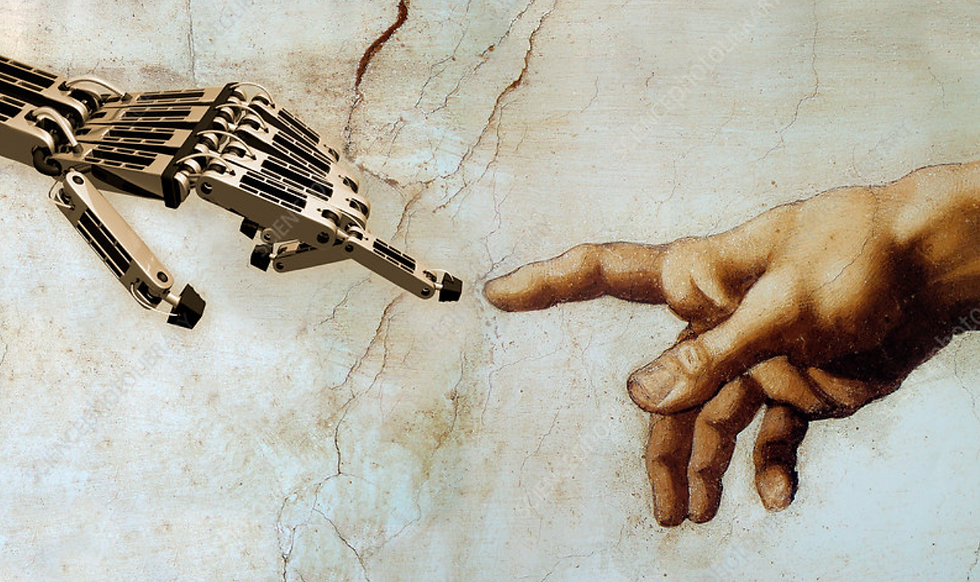
At the end of the day, there’s no simple solution to instantly eliminate the growing problems caused by AI. However, throughout all of these interviews one connecting thread remained true; the belief that AI can never truly replace the “human touch”, something especially inherent to education and the arts. Gardner cited the fact that “hands on engagement leads to longer term retention”, and that a physical instructor who can provide personal instruction and support to students is far more effective, especially for students with special needs that may need additional support. Ultimately, while there is no way to say for certain how far-reaching AI will become or the new potential threats it may pose, it remains clear that teachers remain essential in their role of giving students the ability to go forth into this uncertain world and combat these threats with confidence in their own abilities through reminding them of the value of their individual voice.



Comments