
The Healing Power of Slam: Using Poetry to Build Community


"We want to focus on how someone has been able to continue living even though they’ve experienced so much pain.” - Jenna Robinson, director of Bay Area Creative's Revisions
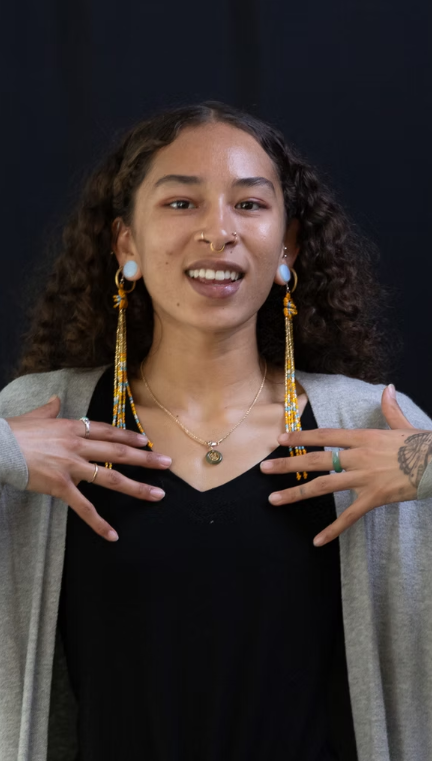
Whether we are aware of it or not, every one of us is a performer. We stand straight and paint a suitable mask for our professional lives, then another for our social circle, which we trade for a different face in our domestic worlds, only able to drop all props and costume when we are completely, truly alone. In truth, performance is a beautiful thing; it enables certain aspects of our energy to shine while protecting others that may need more solitude and peace. In the end, however, no performer can go on forever - there is always a limit in which the acting, the amplifying, and even the hiding take more than they give. What if, however, we could turn our innate power of performance into a form of medicine? Jenna Robinson, cofounder, director, and lead facilitator of Bay Area Creative’s Revisions Program, works with exactly that.
Using creative expression therapy, the Revisions Program guides individuals through writing workshops that aim to confront and process the various difficulties they may be facing. Offering services to folks of all ages, the program works in schools and community centers to reach an intergenerational audience, including caregivers such as therapists and facilitators themselves. As a licensed and registered poetry and creative expression therapist, Robinson helps members find methods and prompts that turn trauma into something less daunting. Utilizing techniques from poetry therapy, multimodal expressive therapy, and narrative therapy, Robinson explains “the power of the witness” and “the ritual of slam,” in which a performer is seen by the audience through their words, soothing whatever nature of pain that lives within them. Robinson continues to elaborate, “Revisions harnesses that part of slam, and teaches people how to be empathetic witnesses in community,” highlighting how poetry, therapy, and community ultimately come together in an act of healing embrace. This program, however, would not be possible without Robinson’s personal experience. Beyond her title on paper, Robinson is also a poet and artist herself, constantly looking to learn from the people and world around her. And given her own traumatic past, this lifetime has taught her plenty with which she uses in her therapeutic practices.

Always dabbling in poetry and the arts, Robinson’s relationship with creation is a long-standing one. Additionally, coming from a multicultural background, Robinson is no stranger to racism and the various forms of exclusion that come with it. Outside of struggles in her social life, her home life also unfortunately exposed her to the harsh realities of general trauma, presenting itself primarily through drug abuse. She was still a college student when her brother tragically passed due to an overdose. Jenna explains, “When my older brother had an overdose, my dad called on me to not let this happen to anybody else… it really shifted my sense of responsibility.” Continuing to turn to the arts as a form of self-guided therapy, Robinson’s first poetry slam in Hawai’i introduced her to its healing power, where a community of acceptance and acknowledgement awaited her. She unveiled pieces cultivated from her struggles, the audience witnessing her with empathy, connection, and understanding. It was this that shifted the trajectory of Robinson’s future, inspiring the creation of Revisions: “I had a lot of healing from it, and similar to a lot of folks in the community, there’s the call to be a facilitator and share the tool.”
The release of such heavy emotions in a group setting, however, requires a delicate level of care that facilitators must be aware of. Even with her master's in expressive arts therapy, her various licenses, and her extensive experience in the arts field, Robinson admits, “Working with trauma is hard. To be an empathetic witness is really challenging.” Caregivers, therapists, and facilitators themselves require their own time to recover from constant exposure to traumatic experiences. Robinson continues to explain that this sliding scale is also apparent in shared spaces like poetry slams: “Especially working with communities with more complex, severe experiences with trauma, not everyone in a group or family space is going to need the same thing. Figuring out how to meet the needs and create safety for a group of folks with vastly different needs that sometimes conflict with each other can be really hard." This makes it especially important to emphasize how a writer’s piece is received and interacted with. This means highlighting the hope, strength, and message behind a poem that encourages an individual’s ability to work through their turmoil, as opposed to the degree of pain or writing skill. The way Robinson puts it, “We want to focus on how someone has been able to continue living even though they’ve experienced so much pain.”
Despite the hardships that arise with confronting one's trauma, as well as the repercussions of handling it as a facilitator, an irreplaceable healing community blossoms as a result. Revisions helps encourage connections between strangers, the embrace of an understanding audience, and the knowledge that you will be heard through your trauma - all of which makes creative expression therapy so vital in transforming people’s lives. According to Robinson, “There has been people [from Revisions] that have gone on to speak at panels, open government events with their poetry…they did that by doing the work and showing up to the space. Poetry did that.” Even aside from the recognition or notoriety poets have received in response to their work, there is true success in every story, simply because it has been told. Reflecting on her experience in the field, Robinson says, “There’s nothing quite like witnessing somebody tell their story, where they go from being a victim to an empowered survivor. It’s crazy to witness that and be a part of that.” Through these transformations, the Revisions Program at Bay Area Creative exemplifies the necessity for such spaces, where tragedy and shared grief bring strangers together through art. Because everyone, to some extent, is a performer, and everyone deserves an outlet through which they can confront, work through, and release the shadows that may lurk behind the curtain call.

“There’s nothing quite like witnessing somebody tell their story, where they go from being a victim to an empowered survivor." - Jenna Robinson


Comments